
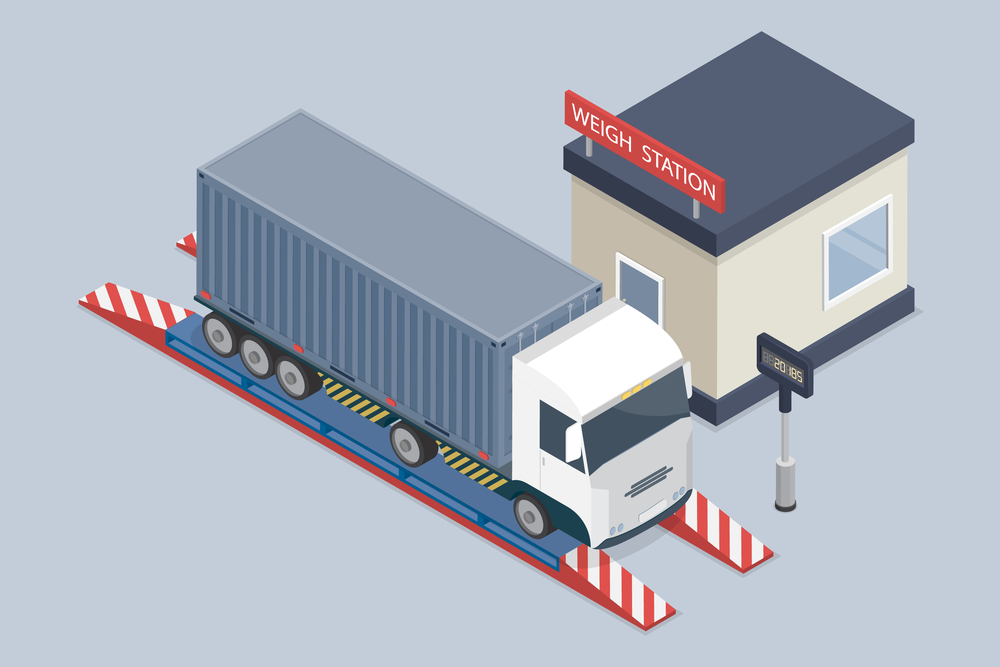
In freight shipping, weight limits are more than just numbers on paper, they’re the backbone of legal compliance, cost control, and ensuring safety. When a shipment exceeds legal axle weight limits or the maximum gross vehicle weight, the impact isn’t only a fine at a weigh station. It’s missed appointments, extra fees, and delayed deliveries that ripple through your entire supply chain.
For shippers, understanding axle weight limits, weight distribution, and federal weight regulations is essential, especially when working across multiple states with different size limits, weight restrictions, and necessary permits. The federal government sets the baseline on the Interstate System, but every state adds its own layer of rules, enforcement standards, and penalties.
Quick Answers: Understanding Legal Weight Limits
- What’s the legal weight limit for a semi truck?
- The federal maximum gross weight for most commercial vehicles is 80,000 pounds assuming proper spacing and compliance with the bridge formula.
- What is the weight limit for a 53′ trailer in the USA?
- A 53-foot trailer typically falls under the same legal weight of 80,000 pounds gross weight, divided across steer, drive, and trailer axles.
- How much weight can a single axle semi haul?
- A single axle generally supports up to 20,000 pounds, though this can vary based on tire width, axle group spacing, and state-specific weight tables.
These numbers might sound simple, but they’re influenced by multiple variables: vehicle combinations, fifth wheel placement, fuel levels, and the overall distance of the trip. Even something as routine as a partial load shift between the first and last axle can alter compliance.
How Much Weight Can a 53-Foot Trailer Carry?
One of the most common misconceptions is that every 53-foot trailer can carry 80,000 pounds of freight. In reality, 80,000 pounds is the maximum gross vehicle weight (GVW) for the combined tractor, trailer, fuel, driver, and cargo under most federal regulations.
A typical breakdown looks something like this:
| Component | Approximate Weight |
|---|---|
| Tractor | 15,000–20,000 lbs |
| Empty 53′ Dry Van Trailer | 13,000–16,000 lbs |
| Combined Empty Weight | 28,000–36,000 lbs |
| Typical Legal Freight Payload | 44,000–48,000 lbs |
Because every truck and trailer combination is different, actual payload capacity varies based on the equipment being used, fuel levels, and any additional accessories installed on the tractor or trailer.
For shippers, understanding this distinction helps avoid overloading freight while improving trailer utilization and remaining complaint with federal and state regulations.
Why Overweight Loads Happen and Why They Cost So Much
Most overweight loads aren’t intentional. They often result from small errors that snowball:
- A dense product stacked too far forward
- A shipper loading by total weight instead of axle group weight
- A last-minute change in trailer type or drive axle spacing
When an axle group exceeds its maximum weight capacity, the driver can’t simply keep moving. They’ll need to find a weigh station, offload or rework freight, or apply for an overweight permit, each adding delay, cost and risk to the delivery schedule.
The penalties vary by state but can easily reach thousands of dollars. Repeat violations lead to stricter inspections, forced offloads, and even jeopardized partnerships with brokers and customers. In short: ignoring weight regulations risks more than money, it risks reliability and reputation.
Understanding Axle Configurations and Why They Matter
At the core of every weight regulation is the axle group. Axles distribute a truck’s total weight, and their configuration determines how much freight can legally move on the road.
Here’s a simplified breakdown:
|
Axle Type / Group |
Typical Weight Limit |
Notes |
|
Steer Axle |
~12,000-13,000 lb. (operational), up to 20,000 lb. federal single-axle cap |
Front axle of the truck tractor, affected by fuel and fifth-wheel position |
|
Drive Tandem Axles |
~34,000 lb. combined |
Found on the tractor; key for balancing load capacity and maintaining fuel efficiency. |
|
Trailer Tandem Axles |
~34,000 lb. combined |
Standard for most 53′ dry vans, reefers, and flatbed |
|
Tri-Axle Group |
42,000-48,000 lb. |
Used in specialized or regional hauling for heavier loads; varies by state and axle spacing. |
|
Quad-Axle Dry Van Hauling Capacity |
Up to 60,000+ lb. (permitted use) |
Common in heavy-haul shipping; always confirm lane-specific permits and limits. |
The Gross Vehicle Weight Rating (GVWR) defines the maximum total weight a vehicle can safely carry, including tractor, trailer, cargo, fuel, and driver. A truck may stay under 80,000 lb gross yet still be illegal if one axle group, often the first or last axle, is overloaded.
That’s why truck drivers regularly adjust fifth-wheel settings or slide tandems to balance weight between axles. Proper balance improves fuel efficiency, reduces wear on tires and suspension, and keeps braking performance consistent.
It’s also important to understand that being under the 80,000-pound gross vehicle weight limit does not automatically mean a truck is operating legally. During roadside inspections, enforcement officers evaluate both the total gross vehicle weight and the amount of weight carried by each axle group.
For example, a truck weighing only 76,000 pounds could still receive an overweight citation if too much of that weight is concentrated on the drive axles or trailer tandems. This is why carriers pay close attention to axle weights during loading and may adjust trailer tandems or redistribute freight before departing.
Balancing weight properly helps reduce unnecessary stress on the truck and trailer, improves braking and handling, minimizes tire wear, and helps avoid costly delays at weigh stations.
Trailer Types and Typical Weight Capacities
Each trailer type has a different maximum weight capacity and ideal loading style:
- Dry Van Trailers:
- Commonly operate within the 80,000 lb total gross weight cap. Heaviest freight should sit directly above or just ahead of the tandem axles.
- Reefer Trailers:
- Slightly lower payload capacity due to the weight of the refrigeration unit, fuel, and insulation.
- Flatbeds:
- Usually carry up to 48,000-50,000 lb of freight, depending on axle configuration and securement points.
- Tri-and Quad-Axle Setups:
- Used when freight density demands more weight without exceeding legal limits. Often require an overweight permit depending on the route.
No matter the trailer, every truck driver and shipper must balance the gross weight, axle spacing, and tire width to stay compliant.
Why Proper Weight Distribution Matters
Staying within legal weight limits is only part of the equation. Proper weight distribution helps ensure the truck handles safely while remaining compliant with federal and state regulations.
When freight is loaded unevenly, one axle group may become overloaded even if the truck’s total weight remains legal. Poor weight distribution can also reduce braking performance, negatively affect steering, increase suspension wear, and create unnecessary safety risk for both the driver and other motorists.
To improve weight distribution, shippers and carriers should:
- Place heavier freight as close to the center of the trailer as practical
- Distribute weight evenly from side to side whenever possible
- Consider delivery sequence without compromising axle weight compliance
- Verify axle weights before departure when hauling especially dense or heavy freight
- Adjust trailer tandems when necessary to balance weight between axle groups
Proper weight distribution not only helps avoid overweight violations but also contributes to safer transportation, improved equipment longevity, and more efficient freight movement.
Practical Shipper Playbook to Prevent Overweight Loads
1. Get Accurate Weights before loading
Don’t rely on estimated shipment totals. Request pallet-level weights and calculate total gross weight before scheduling. Dense SKUs add up fast, especially on smaller trailers or single-axle configurations.
2. Plan Weight Distribution by Axle
Use a loading map that aligns heavy freight over drive axles or the tandem trailer axles. This improves balance and minimizes the chance of one axle group exceeding its limit.
3. Adjust with Equipment Levers
- Fifth wheel placement: sliding forward shifts weight to the steer axle; moving backward shifts weight to the drive axles.
- Sliding tandems: key for moving weight between tractor and trailer groups
4. Verify at a Scale
Before departure, weigh at a certified weight station (e.g. CAT Scale). The ticket shows steer, drive, and trailer axle weights, allowing adjustments before inspection or delivery.
5. Understand State Variations
Federal law sets the baseline, but each state enforces its own state weight table. Axle spacing, tire width, and bridge postings can change your maximum weight allowance from one state to the next. If you’re near the limit, check before routing, or request that your broker handle overweight permits.
When Heavier Freight Requires Special Handling
Not every shipment fits within standard weight limits. Some heavy loads, like industrial equipment, machinery, or construction materials, need more axles, special routing, and precise load capacity management.
Tri-axle, quad-axle, or even double axle combinations allow trucks to legally carry heavier loads while keeping weight distribution safe and compliant. But adding more axles also changes turning radius, braking distance, and suspension stress, critical key considerations for ensuring safety and maintaining strong FMCSA and CSA metrics.
Heavy haul shipping routes may bypass interstate highways due to bridge clearances or local size limits, requiring specialized planning. Shipper should always confirm the route, vehicle combination, and overall distance before loading begins.
Why Weight Compliance Supports Safety and Efficiency
Proper axle balance isn’t only about avoiding fines, it directly impacts fuel efficiency, tire longevity, and vehicle performance. Uneven weight strains drive axles and suspension, making the truck work harder and burn more fuel. Balanced loads allow smoother handling and shorter stopping distances, helping truck drivers maintain control under braking or adverse weather.
Beyond safety, legal compliance supports reliability across the transportation industry. Carriers with strong compliance records maintain better CSA scores, attract more customers, and operate with fewer service interruptions.
FAQs
What is the maximum gross vehicle weight for a tractor-trailer?
80,000 lb is the federal maximum gross weight on the Interstate System, subject to axle spacing and vehicle combinations.
How much weight can each axle hold?
Typically: Steer axle ≈ 12,000–13,200 lb, Drive tandem ≈ 34,000 lb, Trailer tandem ≈ 34,000 lb, within the Bridge Formula and equipment ratings.
What’s the difference between gross weight and axle weight?
Gross weight = combined weight of tractor, trailer, cargo, and fuel.
Axle weight = what’s supported by each axle group, which must stay evenly distributed within limits.
Can I haul more weight with additional axles?
Yes. Adding more axles spreads heavy loads across a longer overall distance, allowing higher legal limits under the Bridge Formula, but you’ll need permits for many moves.
When is an overweight permit needed?
Any time an axle group or gross vehicle weight exceeds legal limits, an overweight permit must be secured before travel on Interstate highways or state routes.
How much weight can a 53-foot trailer legally haul?
Most standard 53-foot dry van trailers can legally haul approximately 44,000 to 48,000 pounds of freight, depending on the weight of the tractor, trailer, fuel, and other equipment. While the maximum gross vehicle weight on most interstate highways is 80,000 pounds, that limit includes the truck, trailer, driver, fuel, and cargo, not just the freight itself.
Key Takeaway
Weight compliance is a combination of engineering precision and operational discipline. For shippers and truck drivers, success depends on understanding axle limits, load capacity, and legal weight regulations, then applying that knowledge at every stage of the move.