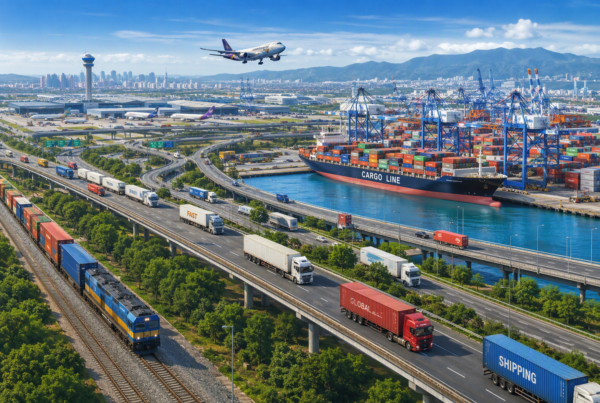

The importance of moving goods efficiently is only getting bigger in today’s supply chains. Companies are getting bigger and more complex, with raw materials, finished goods, transportation and distribution all playing an enormous role in making them tick, and that’s driving up pay for logistics and supply chain professionals fast.
This guide gets down to brass tacks, looking at what a typical logistics salary really looks like, how supply chain management salaries compare and what drives salary growth over time, without getting into all the details on how to break into the field or which education and certifications you should be looking at.
What You Can Expect From an Average Logistics Salary
The average salary in logistics is tough to pin down, as it varies so much depending on the specific job, how much experience you’ve got, and which industry you’re working in. Entry level roles tend to be at the lower end of the pay scale, while the professionals who are managing bigger chunks of the supply chain, like manufacturing and distribution, tend to earn a lot more.
Across the logistics industry, you’ll typically find:
- Entry level roles starting off on the lower end of the pay scale
- Mid-career pros seeing steady increases as they gain some experience under their belt
- And senior logistics and supply chain managers raking it in as the crème de la crème of the industry
The median salary is on the rise as more and more roles shift from just executing day-to-day tasks towards stuff like planning, decision making and strategy.
Logistics Salary vs. Supply Chain Management Salary
Logistics and supply chain management go hand in hand, but they are not exactly the same thing and, unsurprisingly, pay can differ depending on the extent of your responsibilities.
Logistics salary tends to be more about responsibility for things like transportation, day-to-day operations and distribution networks, while supply chain management salary tends to be more about the big picture, covering suppliers, production, forecasting and risk management.
The more of the supply chain you’re responsible for managing, the higher your supply chain manager salary is likely to be, and that means more pressure, more complexity and more accountability.
Logistics and Supply Chain Salaries by Experience Level
Entry Level Logistics Salary
Entry level logistics pros are in the learning phase, figuring out how the whole operation works. At this stage, pay is a bit lower because the decision-making is pretty limited.
Entry level pay is often influenced by:
- Learning your way around logistics software and systems
- Getting hands on experience with transportation, inventory and distribution
- And just generally getting to see how moving goods, managing inventory and coordinating transportation actually works
This is where professionals start to learn the ropes and figure out what it takes to get the job done.
Mid-Career Logistics and Supply Chain Salaries
As logistics professionals gain some experience, pay starts to rise along with their responsibility. Mid-career roles often involve planning, coordination and performance improvement across the whole operation.
At this stage, salaries tend to rise because you’re starting to get involved in things like:
- Data analysis and forecasting
- Coordinating with suppliers, customers and other departments
- Managing cost, demand and operational efficiency
- Supporting project management and cross-functional initiatives
- And just generally being a problem solver, daily.
Management and Leadership Compensation
Leadership roles are where the big bucks are earned. Compensation often includes a higher base salary, bonuses and additional incentives.
Senior professionals are likely to be managing:
- Transportation networks and distribution systems
- Supply chain strategies and risk management
- Manufacturing coordination and the flow of finished goods
- And other similar big-ticket responsibilities
Roles like logistics manager or transportation manager positions earn more because they’re expected to be able to solve problems fast, manage a team and make smart business decisions that impact customers and costs.
What Affects Logistics Salaries
Several things influence how much logistics professionals earn.
Experience and Expertise
As professionals gain experience and develop deeper knowledge of logistics operations, their salary tends to grow steadily.
Scope of Responsibility
Managing more of the supply chain, from raw materials to final distribution, tends to mean higher pay.
Industry and Employer
Some industries pay more than others, especially those with complex manufacturing, global transportation or large scale distribution. And different companies place different values on logistics roles depending on their business model.
Skills and Technology
Professionals with strong technical skills, including logistics software, data analysis and familiarity with automation or AI, often command higher salaries.
Why Some Logistics Roles Pay More Than Others
Higher paying logistics roles usually reflect:
- Broader responsibility across the supply chain
- Greater impact on cost control and customer outcomes
- Leadership over teams, budgets or systems
- Strong communication and decision making skills
- And the ability to solve problems and manage disruption
The more business value a role creates, the higher the compensation tends to be.
Salary Growth and Long-Term Earning Potential
Logistics careers tend to offer steady salary growth rather than sudden jumps. Over time, pay tends to rise as professionals:
- Gain experience across multiple logistics functions
- Develop strong interpersonal and communication skills
- Get better at planning, forecasting and strategy
- Take on roles that require resolving problems under pressure
There are no guarantees, but, with logistics continuing to get more complex, career opportunities in this field are looking pretty solid.
How Logistics Salaries Compare Across the Industry
When comparing logistics salaries from one company to another, the differences usually boil down to:
- The sheer scope and complexity of their operations
- How much technology and software they’re using
- Whether they’re dealing with a domestic or a global supply chain
- What their employer expects from the job and working conditions
It’s not uncommon for two jobs with the same title to have salaries that are worlds apart, depending on these factors
Getting a Real Read on Compensation
Compensation doesn’t just stop at base salary, total pay often includes performance incentives, benefits, and the long-term value that comes from delivering results.
At the end of the day, logistics pay is as much about the role as it is about the level of responsibility, expertise, and decision making the person in that position is expected to have
Some Final Thoughts
Logistics salaries are a reflection of just how critical supply chains have become in our fast-moving, hyper-connected world. As logistics and supply chain pros gain experience, build their skills and take on more responsibility across transportation, operations and distribution, their pay tends to rise to match the challenge
Getting a handle on what drives logistics salaries can help you set realistic expectations and start planning a career in an industry that’s all about solving problems, juggling lots of moving parts and delivering value where it really counts.