For years, many businesses treated third party logistics companies the same way they did any other vendor: get a rate, book the transportation, and move on to the next week. But that’s just not how it works anymore. Logistics has become a whole different ball game.
Companies aren’t just looking for a provider that can book trucks and make deliveries. The expectation now is for a logistics service provider that can actually help them run a better supply chain operation. That means improving visibility, supporting their growth, and helping them navigate the complex world of transportation logistics.
Modern supply chain management isn’t just about moving things from one place to another. It’s about keeping customers happy, keeping inventory in check, running as efficiently as possible, and basically getting the whole supply chain to hum along smoothly. And when that doesn’t happen, when shipments get delayed, inventory runs low, or communication breaks down, the consequences are far more than just higher transportation costs. Customer expectations get dinged, production timelines get blown, and long term business relationships suffer.
That’s why the relationship between shippers and 3PL providers has turned from purely transactional to strategic.
The Shift from Vendor to Full Service Partner
Why Companies Are Rethinking Doing It Alone
Once upon a time, managing logistics operations in house gave companies a sense of control. But as supply chain logistics got more complicated, many businesses started to realize that trying to handle it all on their own often created more problems than it solved.
The transportation landscape has gotten a whole lot more complicated. Regulations are changing all the time, capacity is a constant problem, and customers are demanding real time tracking and on-time delivery like never before. Not to mention the need to cut costs while keeping service quality high.
For a lot of organizations, trying to keep all logistics activities in house just wasn’t worth the investment, not in people, not in technology, not in physical space or infrastructure.
That’s why outsourcing logistics has become a long term strategy instead of a short term fix to save some cash. In fact, the 3PL market in the US has grown at a compound annual rate of 10.2% from 1995 through 2021, a sign of just how heavily companies are relying on outsourced logistics as their supply chain operations get more demanding and technology driven.
Modern third party logistics companies come with a whole bunch of expertise, in freight logistics, managed transportation, warehousing and distribution, freight forwarding, and transportation management, and the best part? They bring all that expertise to the table without forcing companies to build all that up themselves.
That means companies can focus on their core business, like product development and customer experience, while the logistics specialists handle the day to day operation of their transportation logistics. Outsourcing logistics lets organizations focus their internal resources on the things that really matter to them, like sales growth and customer experience.
Why 3PL Adoption is Still on the Up
The logistics industry has grown so big that 3PL providers are becoming increasingly important to companies of all sizes. In 2022, a whopping 92% of Fortune 500 companies were working with at least one 3PL provider, up from just 46% in 2001.
That big of a shift reflects the changes that are happening across the supply chain. Companies aren’t just using 3PLs a last resort anymore. They’re integrating 3PLs directly into their logistics functions, including warehousing operations, transportation management, inventory management, order fulfillment, and freight forwarding.
A lot of businesses also recognize the financial benefits. In 2021, US shippers spent $339 billion outsourcing to 3PLs, accounting for 12.2% of total logistics costs globally, up from 10.2% in 2019.
Focusing on Core Business and Growth
One of the main reasons companies partner with third party logistics providers is because it lets them focus on what really matters, like their core operations.
Manufacturers want to focus on production and product development. Retailers want to focus on sales and customer experience. Food companies want to focus on getting their products to market on time. Most organizations don’t want to have to worry about all the behind the scenes logistics stuff like transportation disruptions, route planning, carrier selection, or fixing exceptions on a day to day basis.
A good 3PL partner lets those internal teams focus on the stuff that really counts. And that’s a huge benefit, especially when companies are growing.
When companies expand into new markets, they often need to add new transportation solutions, more storage space, and a bigger logistics network. And that can require a whole bunch of new investments in warehouses, transportation assets, tech platforms, equipment, and labor.
But a scalable 3PL partner lets companies expand without having to build all that up themselves. They can use the 3PL’s existing warehouses to free up internal resources, and scale up their logistics network without having to build a whole new infrastructure.
Getting Stuff Done and Running Efficiently
Simplifying Operations with Better Logistics Coordination
Modern third party logistics companies are expected to do a lot more than just book the freight and send it on its way. Shippers want a partner that can streamline operations across the whole supply chain.
That means doing things like transportation management, scheduling coordination, route optimization, freight management, warehousing operations, and real time shipment tracking.
When logistics processes are running smoothly, you get fewer delays, higher shipping efficiency, and a more consistent overall supply chain. Many businesses are now demanding that their logistics providers don’t just react to problems as they come up, but actively go out and look for things that can be improved. This proactive approach is one of the main things that’s starting to set apart those “freight providers who just get the job done” from the kind of partners companies really want when it comes to getting everything moved.
3PLs also really integrate themselves into a company’s operations, taking care of logistics functions like transportation, warehousing, distribution & order fulfilment. Their usual services include freight forwarding, e-commerce fulfilment, inventory control and special storage solutions, which of course depend on the specific needs of the customer.
The Growing Role of Managed Transportation
Managed transportation is becoming a key part of how companies handle supply chain logistics these days. It’s not just about booking loads & getting them on the road, it’s about optimizing the transportation logistics side of things, making sure the right freight goes to the right place at the right time, choosing the best carrier to get the job done efficiently and staying on top of how everything is performing.
By using managed transportation models to outsource their transportation management needs, companies can really improve their cost efficiency and streamline their operations, while still being able to keep an eye on other areas of the logistics chain. The providers of managed transportation use all sorts of advanced analytics, and data tools to really get the best out of the transportation process and drive up supply chain performance.
This approach also makes it a lot easier to scale up transportation solutions at times when business is booming or demand is fluctuating.
The Role of Route Optimization & Transportation Planning
Transportation costs are always fluctuating with fuel prices, supply and demand, weather and all the rest. So cost efficiency is now a top priority in supply chain logistics.
Most modern 3PL providers use route optimization and smart routing strategies to really make sure everything runs as efficiently as possible, while still meeting delivery deadlines.
Effective route planning helps reduce those miles when the truck is empty, saves on unnecessary transit time and improves the reliability of schedules. It also helps businesses decide which transport mode to use depending on what needs to get shipped and what needs to happen fast.
Of course sometimes speed is the priority, and at other times cutting costs becomes the main focus. Experienced transport logistics providers help companies find a balance between the two, rather than just trying to do one thing and hope for the best.
That flexibility is especially important when demand is high and capacity is tight, which is always a recipe for trouble for companies who run into scheduling issues.
Visibility Is No Longer Optional
One of the main shifts that have been in the logistics industry lately is the expectation around visibility.
Real-time tracking and updates are no longer something you can offer as a premium extra. They’re now just the baseline expectations from customers and shippers alike. They expect to be kept in the loop, they want to see what’s going on, and they want access to accurate shipment data all the time.
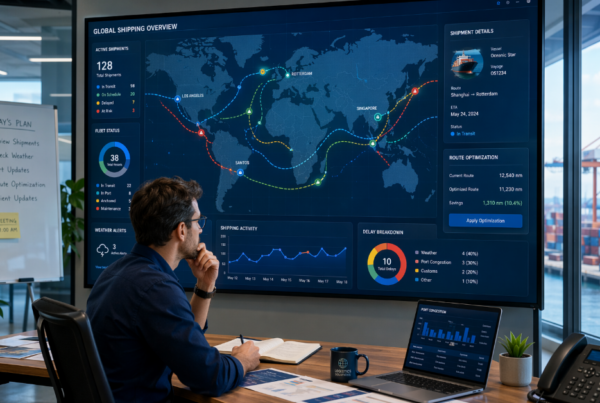
That’s why modern transportation management platforms are putting real-time shipment tracking and reporting at the top of the agenda, along with communication tools that let stakeholders keep tabs on what’s moving where and when.
Technology has become a key differentiator for third party logistics companies, especially where things like Transportation Management Systems (TMS), predictive analytics, AI and other tools are concerned.
Whether freight is moving through managed transportation networks, warehouse ops or final delivery stages, visibility is key to keeping customers happy and the supply chain running smoothly.
The Pillars of Supply Chain Performance
Beyond Transportation: Managing the Full Supply Chain
Supply chain management isn’t all about getting the freight from A to B any more.
Today’s 3PL providers are often involved in all sorts of things beyond transportation, from managing inventory levels, to coordinating warehousing and distribution, to taking care of order fulfilment & reverse logistics as part of a bigger transportation strategy.
And that means companies are now expecting logistics providers to support a wider range of supply chain operations, rather than just focusing on transportation.
3PLs will often be in charge of receiving inventory from manufacturers, storing it in their warehousing facilities, documenting products and working with carriers to get everything shipped out on time. Many also negotiate better shipping rates for their customers by making deals with carriers and building relationships.
Getting all the different pieces of the supply chain to work together smoothly is key to really driving freight flow and shipping efficiency.
Risk Management & Regulatory Compliance
With all the disruption, risks and challenges in the supply chain these days, companies are placing a big emphasis on risk management within their logistics relationships.
That means logistics service providers need to be on top of regulatory compliance challenges, ahead of the curve on potential disruptions and always mitigating potential problems before they become major issues.
This includes making sure carriers comply with the right regulations, keeping an eye on documentation requirements, understanding how to navigate transport regulations & addressing any operational risks before they get out of hand.
3PLs tend to have the knowledge and expertise to stay on top of logistics regulations and industry best practices, which can really reduce the risk of costly errors or compliance issues.
And on top of all that, proactive exception management plays a big role too.
Companies are now expecting providers to spot problems as they happen and fix them on the fly, whether it’s scheduling delays, weather disruptions, routing issues or inventory shortages. That proactive logistics coordination can make all the difference to the health of the supply chain.
The days of just waiting for problems to happen and then dealing with them are pretty much over.
Data-Driven Decision Making & Continuous Improvement
Supply chain management has become a pretty data-driven process.
Companies now expect robust reporting, measurable KPIs and ongoing performance monitoring to drive long-term decision making.
That data lets businesses evaluate service quality, spot operational gaps, fine-tune transport solutions and drive improvement initiatives across the whole logistics operation.
It’s all about using the information at hand to keep driving positive change. Advanced analytics and reporting capabilities enable businesses to keep a close eye on key performance indicators like transportation costs, how well their transit is performing, the accuracy of their inventory, and how reliable their delivery times are. This all helps to boost the overall efficiency of their supply chain.
Modern KPIs often include things such as:
- Is there a record of getting things delivered on time
- Are our suppliers accepting all of our tenders
- How often do we get complaints about freight claims
- Is our transit reliable and consistent
- How well are our carriers performing
- How accurate is our inventory
- Are we shipping efficiently
- What does it cost to ship per item
- How long does our stuff sit in transit (i.e. ‘dwell time’)
- How quickly are we resolving exceptions
The ultimate goal isn’t just producing reports. Its actually using the data from our operations to continually improve our supply chain performance over time.
Tailoring Solutions to Business Requirements
Every Industry Has Different Logistics Needs
No two supply chains operates exactly the same way.
Companies in the food and beverage industry are particularly keen on keeping their products at the right temperature and getting them to their destinations on time. Retailers tend to focus on being able to get orders fulfilled quickly and having visibility over their inventory. Manufacturers on the other hand often want to be able to count on reliable and predictable transportation logistics to support their production plans.
Its for this reason that tailored solutions are so important.
State of the art 3PL companies are expected to adapt their logistics functions to meet the specific needs of their customers rather than forcing those customers into a rigid operating model.
The logistics industry is increasingly placing a value on flexibility because the way supply chains operate can vary so significantly from one industry to another.
Beyond Just Moving Freight
Many shippers today expect that their 3PLs will provide services that go well beyond just freight forwarding.
For example:
- Helping handle reverse logistics (i.e. getting products back from customers)
- Implementing strategies for warehousing and distribution
- Cross docking (i.e. moving products from one truck to another without storing them)
- Providing support with inventory management
- Fulfilling orders
- Putting together managed transportation programs that are customized to the needs of the client
- Offering specialized transportation solutions (i.e. for things like oversized items)
- Renting out temporary storage during seasonal demand surges
As supply chains become more complicated, companies are increasingly relying on their logistics partners to provide operational support across a variety of logistics activities rather than just isolated transportation services.
Capacity and the Ability to Scale Matter
Scaling is another major expectation in modern 3PL relationships.
When a company experiences a surge in demand, they need a transportation provider who can quickly adjust to provide the additional capacity they need, without disrupting the quality of their service.
That may involve securing more carrier capacity, expanding the company’s warehouse operations, switching to different transportation modes, or providing temporary storage space during seasonal spikes in demand.
3PLs allow companies to expand their logistics operations to meet changes in demand, without having to invest heavily in new infrastructure, labor, or transportation assets.
Having a flexible logistics network lets a company respond quickly to changing market conditions, without over committing long term resources.
Financial Impact and Service Quality
Cutting Costs Without Sacrificing Performance
Cost savings still matter when it comes to logistics management. But most shippers aren’t just looking to get the lowest rate at any cost anymore.
Instead, they are looking for transportation solutions that balance cost savings with things like reliability, communication, visibility and service quality.
Seasoned 3PLs can help companies save money by more efficiently managing their freight, selecting the right carriers, optimizing their routes, and planning their transportation better.
3PLs also help save on operational costs related to things like warehousing, transportation technology, labor and facilities, while improving shipping efficiency through more streamlined logistics operations.
In the end, this approach often yields stronger, longer term savings than just focusing on short term rate reductions.
Poor execution is only likely to erase those initial savings by resulting in missed appointments, inventory problems, production delays, and customer dissatisfaction.
The Connection Between Supply Chain Performance and Customer Satisfaction
When it comes to supply chain logistics, strong performance has a direct impact on customer satisfaction.
In fact a study of over 500 shippers found that providing an on time service was the single most important factor when it came to selecting a 3PL provider.
When shipments are consistently delivered on time, inventory stays available, communication is clear and service disruptions are handled proactively, businesses build stronger relationships with their customers.
That’s why overall efficiency across transportation logistics, warehousing activities and logistics coordination has become such a competitive advantage.
Supply chain performance is no longer just seen as an operational metric, its now a key part of customer retention, revenue growth, and long term business success.
Conclusion
The relationship between shippers and 3PLs has come a long way from just being about moving freight from point A to point B.
Today businesses expect that their logistics partners will support their supply chain operations, improve operational efficiency, strengthen risk management, and provide real time visibility across the entire logistics process.
They expect providers that understand their business needs, support continuous improvement, and deliver customized solutions that adapt as supply chain demands evolve.
A successful 3PL partnership is ultimately defined by far more than just rates. Its built on consistent logistics coordination, scalable transportation solutions, strong service quality, and a proven ability to strengthen a company’s transportation strategy over the long term.
In todays logistics industry, the right 3PL relationship is no longer just a vendor agreement, its a competitive advantage.